
Do four tasks
Use a treat toy, a hidden treat, stairs, and a low step.
Dog paw preference
Do four simple at-home observations, count clear left and right paw uses, and see whether a pattern appears.
Quick version
Use a treat toy, a hidden treat, stairs, and a low step.
Skip both-paw or unclear attempts when calculating the score.
The calculator combines the tasks into a simple paw preference guide.
Setup
Set up the tasks first, then count only clear single-paw attempts. Always count left and right from your dog’s perspective, not yours.
Skip any task that feels unsafe, stressful, slippery, or frustrating for your dog.
Step 1
Try to repeat each task until you have about 10 clear attempts. Count only attempts where you can tell which front paw was used.
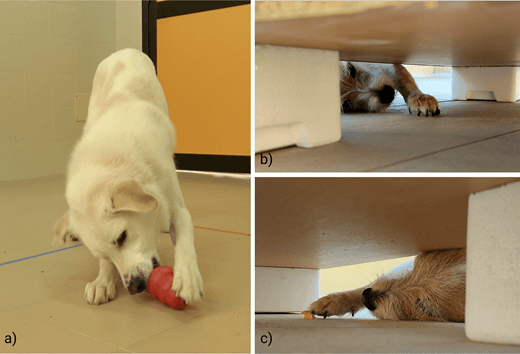
Use a Kong or another toy filled with food that is safe for your dog. Place it in front of your dog and let them work on it. Count the first front paw that touches or holds the toy. If both paws land together, do not count that attempt.
Put a treat under a sofa, bed, or cabinet where the mouth cannot reach but a paw can. Stand about one meter behind your dog and let them find it. Count the first front paw used. Do not frustrate your dog. If they cannot reach it easily, stop and give an easy treat.
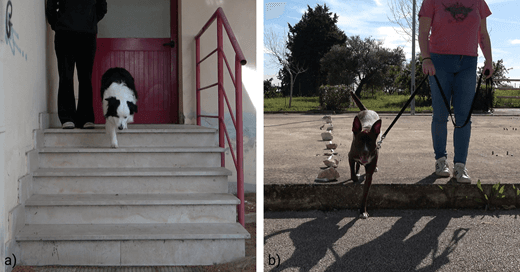
Sit your dog calmly at the top step, facing down. Call them down and count the front paw that starts the movement. Skip this task if your dog is young, elderly, injured, nervous on stairs, or if stairs are not safe.
Use only a very low, safe step. Walk your dog straight toward the edge on a loose lead, not diagonally. Count the first front paw that touches the ground. Skip this task if your dog hesitates or if the surface is slippery.
Step 2
Tap while you observe your dog, or enter counts afterward. Everything stays on this device.
0 of 4 tasks started · 0 clear attempts total
Best result: complete all four tasks if your dog is comfortable.
Continue with treat toyIndependent educational site inspired by a published method. Not official, veterinary, or medical advice.
Count the front paw your dog uses to touch or hold the toy.
Left paw means your dog’s left paw, not the paw on your left as you face them.
Safety note: Use food that is safe for your dog.
Count which front paw starts the movement down.
Skip if stairs are unsafe or your dog hesitates.
Left paw means your dog’s left paw, not the paw on your left as you face them.
Safety note: Skip this task if your dog is young, elderly, injured, nervous on stairs, or if stairs are not safe.
Count which front paw touches the ground first.
Skip if your dog hesitates or the surface is slippery.
Left paw means your dog’s left paw, not the paw on your left as you face them.
Safety note: Use only a very low, safe step. Skip if your dog hesitates or the surface is slippery.
Source note
From hands to paws in assessing canine motor laterality.
DOI: 10.1098/rsos.252201
Read the original paperSmall print
No. This is an independent, educational website inspired by the published method.
No. Paw preference can be relevant to research on behaviour and welfare, but this calculator is not a clinical tool.